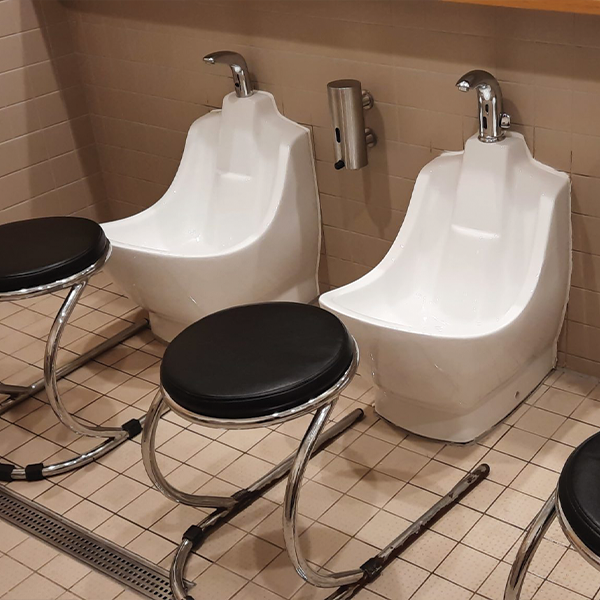
Performing Wudu using the WuduMate Modular
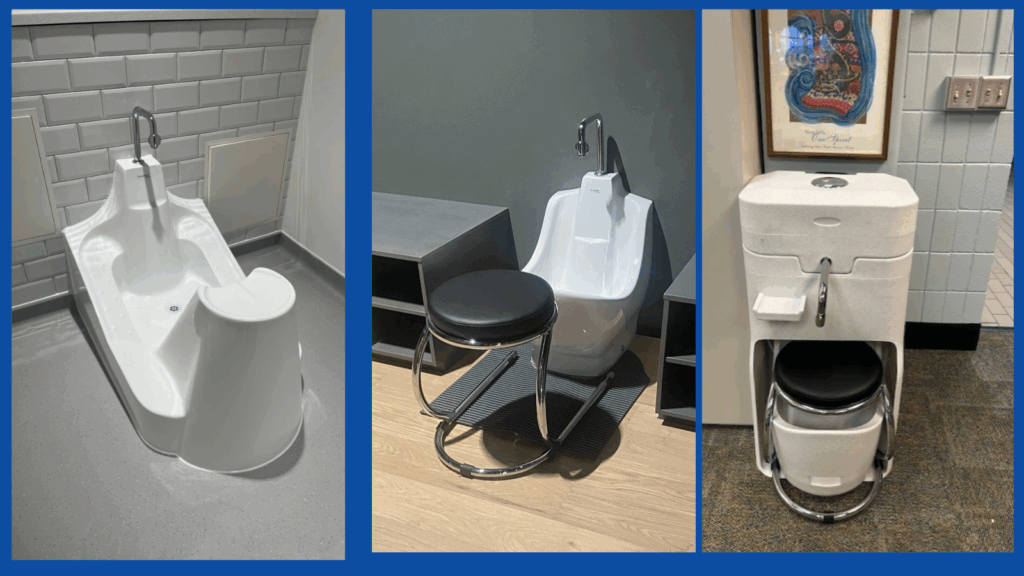
The video shows how easy and comfortable it is to perform wudu using the WuduMate Modular. The tap is at the correct angle to minimise splashing and there is a comfortable footrest to assist foot washing. Taps can be configured with a wrist blade or auto sensor to assist those with limited mobility.
This video shows the Wudumate Modular with a soap shelf, which can also be used to hold watches and other valuables. The Modular can also be configured with an inbuilt soap dispenser behind the back panel
The WuduMate Modular can also be configured without a seat, to allow wheelchair access or for those who prefer to perform wudu whilst standing. In a bank of WuduMate Modular units, you can specify how many of them have seats.
The seat tops and seat pole base covers come in a variety of colours and finishes to compliment your decor, and the units can be finished with co-ordinating vinyl decals.
Any Questions? Contact our Customer Services Team here
Information and Spec sheets for WuduMate Modular
“I didn’t always have a mineral water bottle to hand when I wanted to wash, and taking cups of water into a toilet is not always practical, so the WuduMate is ideal. It can be easily carried in your pocket or handbag, can hold a litre of water which is far more than the small water bottles which we normally use, and after use can be easily folded away again for use next time.”
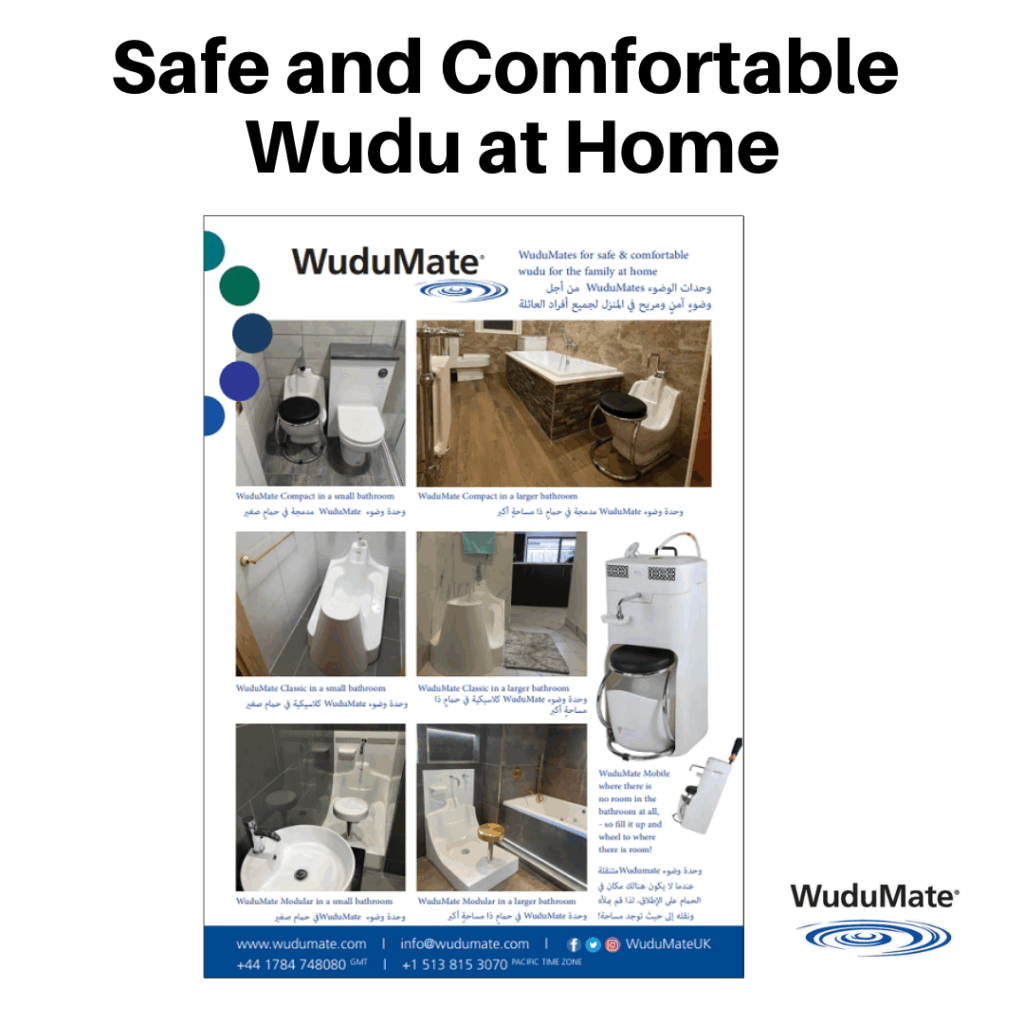
New WuduMate Brochure for Mosques
We have recently published a new WuduMate brochure, aimed specifically at those who are fitting out mosques, Islamic Centres, and similar ablution areas which are likely to have high traffic.
This brochure focuses on the WuduMate products which are most often chosen by our mosque customers, pointing out the features of each, with before and after photos to show how a refit can transform and enhance a busy wudu area.
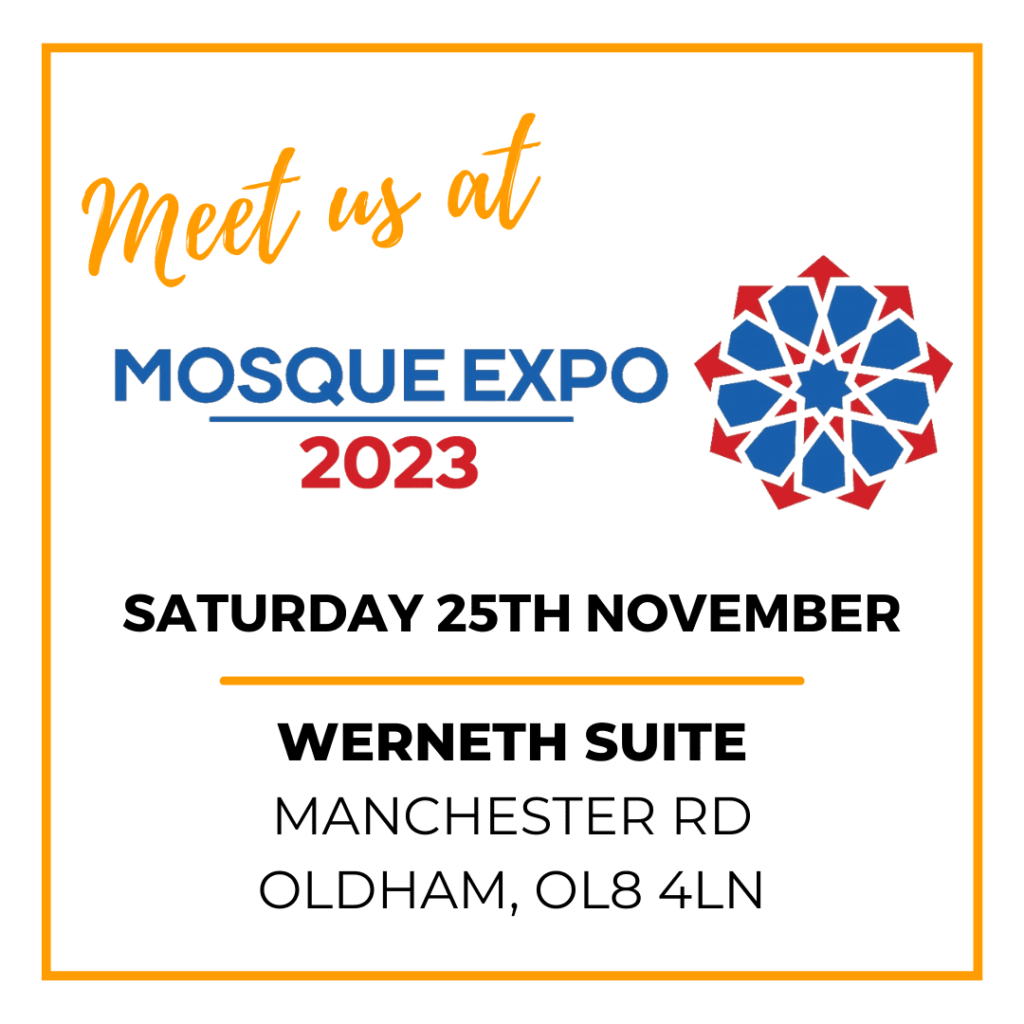
You can download a pdf copy of the new Mosque Brochure by clicking here, or you can get a hard copy brochure by visiting our stand at Mosque Expo this Saturday, 25th November in Manchester.
If you would like us to post you a copy of the brochure and you cannot come to Mosque Expo, please fill in the Contact Form, indicating that you would like a Mosque brochure (or any other document) and including the name and address you would like the brochure to be sent to.

- Images of WuduMate Modular
- WuduMate Modular specifications
- Images of other models in mosques
- Any Questions? Contact the Sales Team
You may also enjoy these posts:
“I didn’t always have a mineral water bottle to hand when I wanted to wash, and taking cups of water into a toilet is not always practical, so the WuduMate is ideal. It can be easily carried in your pocket or handbag, can hold a litre of water which is far more than the small water bottles which we normally use, and after use can be easily folded away again for use next time.”
WuduMate exhibiting at Mosque Expo in November
We hare very happy to announce that WuduMate will once again be exhibiting at Mosque Expo on Saturday 25th November near Manchester.
Mosque Expo is a wonderful day out for adults and children alike, with lots to see and do for all the family. We are looking forward to meeting the people who have been nominated for this year’s Beacon Mosque Awards, and to meet some people who have not been able to attend the Expo when it was held near London.
You can apply for free entry tickets by clicking this link:

“I didn’t always have a mineral water bottle to hand when I wanted to wash, and taking cups of water into a toilet is not always practical, so the WuduMate is ideal. It can be easily carried in your pocket or handbag, can hold a litre of water which is far more than the small water bottles which we normally use, and after use can be easily folded away again for use next time.”

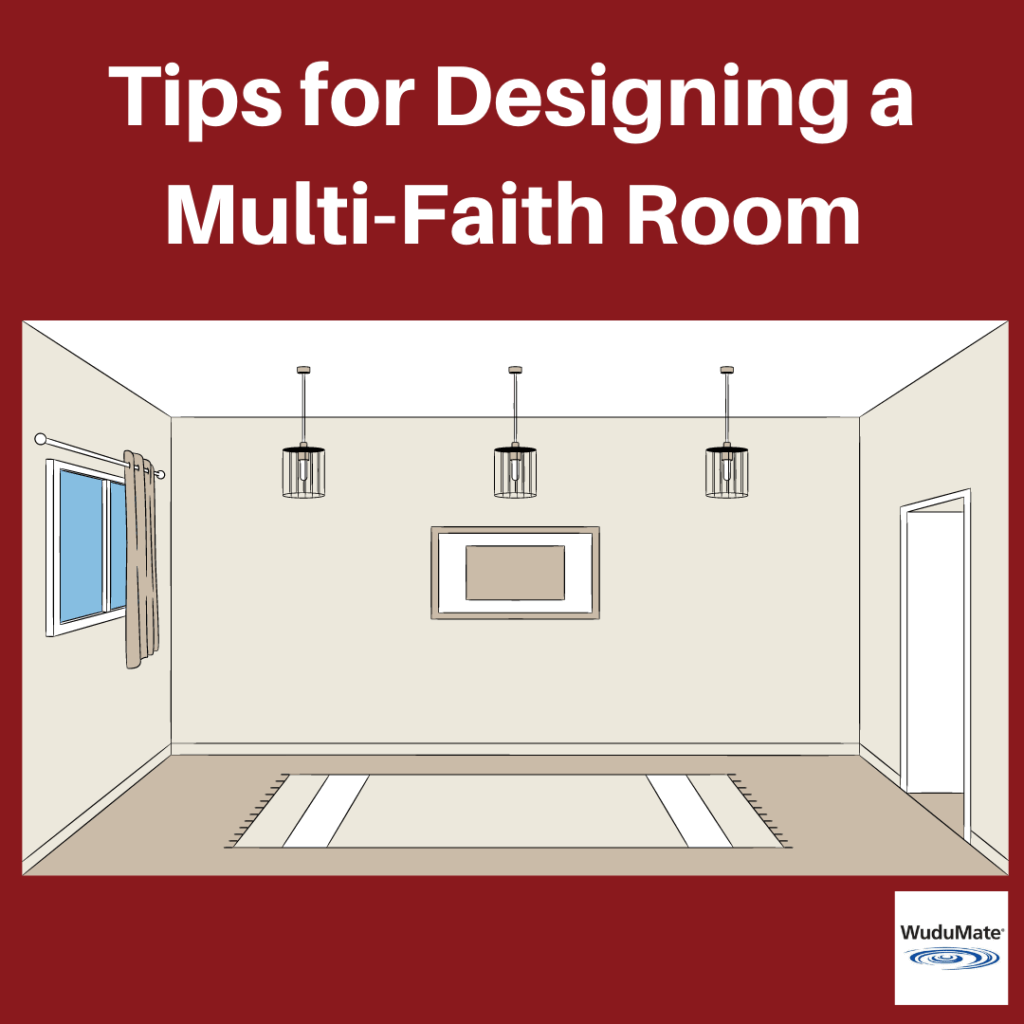
Tips for Designing a Multi-Faith Room
This article is an extract from our booklet Diversity Matters – a guide to Best Practice in the Design of Multi-Faith rooms. To download a pdf copy of the full booklet, please click the image below
If you are planning a multi-faith room in your facility, the first thing you need to do is consider the cultural mix of potential users of your facility, and what they will be looking for if they wish to pray, read or meditate during the day.
Different faiths have different approaches to ritual duties and performance. For example, whilst Christianity is not demanding in terms of specific daily rituals, Islam requires Salat (prayers) be performed five times a day. This inevitably means that for proper observance, Salat will almost certainly occur at times during the ordinary working day.
If you have a significant number of Muslim users, it makes commercial sense to try to minimise the amount of unproductive time involved in getting to, using and returning from the prayer facilities provided. This can be achieved by having a multi-faith room close to individual work locations, in the same way as toilets are distributed for convenience around buildings.
Ideally, multi-building campuses should have a prayer room in each building, multifloored offices should have a faith room on each floor. A cost-benefit analysis would clearly demonstrate whether or not such an arrangement was justified with an overriding benefit being a saving of unproductive time, traveling to and from such facilities.
Having decided how many multi-faith rooms you need, and the location of them, there are several things you should take into account when designing each room.

To download a pdf copy of the full booklet, please click the image below
Room Size
The size of a prayer room should be commensurate with the number of people likely to use it at any one time. The requirements of Muslims are the most predictable, since their daily prayer routines take place at fixed times of the day determined by the times of sunrise and sunset. Furthermore, Salat follows a fairly fixed formula.
There are also defined times for Jewish prayer at least twice a day, again determined by dawn and dusk. However, there is more flexibility allowed to Jews who can usually pray early in the morning before work and in the later afternoon or early evening after work. Because the times for Muslim Salat are generally fixed, multi-faith rooms need to be large enough to accommodate all Muslim staff at one time,
It is unlikely that all Muslim staff will perform Salat every day, for example, females will not pray during their menstrual cycle, and prayer times on normal weekdays are more flexible than on Fridays, so it would be unlikely for all Muslim staff to be in the prayer room together. On Fridays however, it is obligatory for males to perform Salat in a group, similarly on days of Islamic significance (Eid and Ramadan).
Christians and adherents to most other faiths have no rigidly fixed times for daily prayers, so it is reasonable to assume that they would not choose to use the faith room during the times of Salat.
Each Muslim requires approximately 1.2m × 0.6m (4’ x 2’) of floor space on which to perform Salat. This enables them to place their forehead on the floor whilst kneeling, just touching shoulders with those on either side of them, so a prayer room should ideally be large enough to accommodate this number.
Provision needs to be made for ritual ablution prior to Salat (wudu) and this is discussed separately below. Ideally, entirely separate facilities for prayer and washing should be provided for Muslim men and women. However, if men and women are to share the same prayer room, women would normally stand behind the men separated by a curtain. In order to cater for varying numbers of men and women the curtain should be mounted on a moveable rail, so the position of the partition can be varied, alternatively, if no women are present, it can be removed altogether.
This same curtain partition would also be used by traditional Jews who pray publicly in a quorum of 10 men separated from any women present. It is entirely inappropriate to provide communal male and female washing facilities. Whether a single faith room or separate male/female rooms are provided, there will need to be separate washing facilities, unless the washing facility is behind a locked door to ensure privacy for women.
Orientation of the Prayer Room
For most faiths there is no fixed direction in which prayers should be said although the cruciform footprint of older Christian churches follows a predictable orientation. Jews generally pray facing east towards Jerusalem. For Muslims however, it is mandatory for them to face the Ka’ba during prayer. This is an ancient religious site located in the city of Mecca. Although the prayer room itself does not have to be orientated in any particular way, there should be some indication in it of which direction each wall faces – specifically the direction of east and of the city of Mecca.
The exact direction of Mecca obviously depends on where in the world/country the faith room is located. A compass is available from most Muslim bookshops which indicates the exact direction of Mecca. An arrow, positioned on the ceiling is also recognised as a practical means of indicating this direction and can be purchased from WuduMate.
Ideally, the entrance to the room should be situated to enable worshippers to enter and leave the room without passing in front of those at prayer.
Shoe Storage
Cleanliness plays a significant part in most religions, but some faiths have a specific requirement for shoes to be removed before prayer. All visitors to the prayer room should therefore be encouraged to remove their shoes before entering. A sign to this effect should be displayed, suggesting to those who do not wish to remove their shoes that, out of respect to others, they should avoid walking across the main prayer area.
There should be an area where shoes can be removed prior to entering the faith room or associated washing areas, and a rack in which visitors can leave their footwear once removed.
Toilet Facilities
It is not mandatory to have toilet facilities installed within a prayer room environment, however if they are included, it should be remembered that Muslims should not use a toilet facing the same direction in which they pray, i.e. facing Mecca. In addition, for a number of reasons, Muslim men will generally not use urinals, and prefer to urinate seated to standing, in the privacy of a toilet cubicle.
It is suggested therefore, that when planning the location and design of toilets in the workplace, if a higher-than-normal percentage of staff are likely to be Muslim, more cubicles and less urinals are provided than might be normal, and urinals are excluded altogether from multi-faith areas.
It should also be noted that some ethnic groups (including Muslims) require to wash their personal parts with water after using the toilet, rather than using paper, in other words, they require a private bidet facility.
Fixtures and Fittings in the Prayer Room
Religious Icons
The permanent presence of religious icons for one particular faith group can offend other religious groups and can create an atmosphere of ‘possession’ by one group. If the use of icons is specifically required by a particular religious group, there should be a cupboard for their storage when not in use. Ideally there should be a minimum of four such cupboards (to represent four of the major faiths).
There are cupboards available which look like bookshelves from the front, but when opened up have different designs inside; once the outer doors of the cupboard are opened, internal designs can include:
- A shelf-like Christian altar, on which other Christian artefacts can be placed such as a cross or Bible, with cupboard space underneath.
- Muslim designs and graphics to look like a mini-mosque; appropriate lighting can also be installed in the cupboard.
Furniture
Furniture is not a mandatory requirement in a multi-faith facility, it is appropriate however to provide some informal seating for more casual visitors to use when reading or simply sitting in contemplation.
A simple table should also be provided for items required by some faiths as part of their ritual. Christians, for example, would appreciate the presence of a cross or crucifix to denote an altar. Jews might use a table for study, which is usual for them before, during or after prayer.
Ideally any furniture should be capable of being easily moved away from the central area of prayer. Such relocation should not be to the wall which people of particular faiths would face in prayer. The use of benches would be acceptable but there should also be some movable chairs for those who wish to sit at the table, or who find it difficult to kneel. The use of leather furniture should be avoided since Hindus cannot accept leather in their places of worship.
Floor Covering
The covering of the prayer room floor should be in a neutral colour, so as to be acceptable to all faiths. It needs to be easy to keep clean.
Books and Religious Reading
Books and other religious publications such as calendars could be made available, but nothing should be left in permanent view, so as not to offend those of other faiths. It should instead be stored on a shelf or preferably in a cupboard. Material for promotional or advertising purposes should not be allowed.
Leather covered books should be avoided due to the offence caused by cow hide in religions such as Hinduism (see 5.6.2 above).
Lighting
The prayer and washing areas should be well lit – ideally, in today’s environmentally aware world, with energy saving devices.
Windows
Windows will assist with the lighting and natural ventilation of the prayer room, but users might prefer obscure glass to be used. Stained glass windows can add to the aesthetic appeal of the décor, but the subject matter should be neutral with no religious connotations.
Other
Prayer caps, mats, cushions and other items should be kept in cupboards so as not to cause offence. The burning of incense may contravene fire regulations and run the risk of activating smoke sensors and should be strongly discouraged.
If the use of candles is to be allowed, this should be closely monitored and supervised. Appropriate legislation must be consulted, and a risk assessment undertaken. Ideally no more than one or two candles should be lit at any one time and should not be ‘religion-specific’.
Other Places of Worship
Contact details and addresses of other local places of worship such as churches, mosques and synagogues should be available. If the faith room is to be locked when not in use, a notice to this effect should be posted outside.
Signage
Statutory Signage
Statutory notices such as “No Smoking”, “Fire Exit”, “No Naked Flames” and any others that may apply to fire regulations and other legislation should be displayed.
Multi-faith and Wudu Room Signage
Different signs are recommended to suit the layout of the Multi Faith facilities, these could include the following: PRAYER ROOM, MULTI-FAITH ROOM, QIBLA
This article is one in a series that has been extracted from our booklet DIversity Matters -a guide to Best Practice in the Design of Multi-Faith rooms. You can download the whole booklet, or read other articles in this series here:
“I didn’t always have a mineral water bottle to hand when I wanted to wash, and taking cups of water into a toilet is not always practical, so the WuduMate is ideal. It can be easily carried in your pocket or handbag, can hold a litre of water which is far more than the small water bottles which we normally use, and after use can be easily folded away again for use next time.”

WuduMate Frequently Asked Questions (FAQs)
Read our the Frequently Asked Questions (FAQs) we get asked about us and our products.
Product Usage and Features
1. Q: What is WuduMate?
– A: WuduMate is a specialised range of products designed to facilitate the Islamic practice of Wudu (ablution). It offers a convenient, hygienic, and efficient way to perform Wudu, suitable for homes, mosques, workplaces, and multi-faith rooms.
2. Q: Can WuduMate products be used for other practices?
– A: Yes, WuduMate products are versatile and can be used in multi-faith rooms to accommodate other practices which may require washing or purification
3. Q: How do I install a WuduMate unit?
– A: Installation of WuduMate models is straightforward and can be undertaken by any semi competent plumber. Detailed installation guides and videos are available to assist installation.
Maintenance and Cleaning
4. Q: How often should I clean my WuduMate unit?
– A: For optimal hygiene, we recommend cleaning your WuduMate unit as you would a shower tray in your home, with a mild detergent and water. Regular maintenance will keep it in excellent condition.
5. Q: What cleaning products are safe to use on WuduMate units?
– A: Use mild, non-abrasive cleaners to avoid damaging the surfaces. Avoid bleach or harsh chemicals.
6. Q: How do I prevent water stains on my WuduMate unit?
– A: All WuduMate models are manufactured in materials proven in sanitaryware applications (e.g. porcelain and acrylic) which are designed to be resistant to staining, in the same way basins showers and baths are in the home. Regular cleaning will ensure WuduMates are potentially a lifetime investment.
Customisation and Options
7. Q: Are there different sizes and models of WuduMate units available?
– A: Yes, There are a number of WuduMate models to suit different needs and spaces, to suit virtually any building type. Please refer https://wudumate.com/wudu-foot-baths/ to compare the sizes and features of our different models
8. Q: Can I customise the colour and design of my WuduMate unit?
– A: The primary colour for all WuduMates is white; experimentation with black and black & white has proven to be unpopular due to the difficulties in keeping black looking clean. (similar to black cars!) The WuduMate Modular however has numerous customisation options to match customers specific preferences including different coloured seat tops, and a number of standard designs of decoration and the option to customise these designs.
Accessibility and Inclusivity
9. Q: Are WuduMate units accessible for people with disabilities?
– A: Absolutely. Most WuduMate models can be configured to provide accessibility and comfort for people with disabilities and limited mobility. Many can be used by wheelchair users Please refer to the individual models for details.
10. Q: Can children use WuduMate units safely?
– A: All WuduMate models can be used by children, we recommend though that the WuduMate Compact, WuduMate Mobile or WuduMate WuduBasin are utilised if younger children will be using the unit regularly, as the stool can be moved, allowing the child to sit at the optimum distance from the water outlet in terms of comfort and safety. We would always recommend supervising very young children when using our units.
Technical Specifications
11. Q: What are the water usage rates for WuduMate products?
– A: All WuduMate units are designed to be water-efficient with aerators limiting flow to 3.7lpm (1USG) or optional 1.8lpm (0.5USG).
12. Q: What materials are WuduMate units made from?
– A: WuduMate units are constructed from high-quality, durable materials that are proven in sanitaryware applications designed to be resistant to water and wear & tear, ensuring long-lasting use
Purchasing and Shipping
13. Q: Where can I purchase WuduMate products?
– A: WuduMate products can be purchased directly from WuduMate or through authorised international distributors. The best option is to email sales@wudumate.com giving details of your application and location so our sales support team can advise the best model based and the most cost effective delivery methods; if you already know which WuduMate model you are interested in, request a specific quotation.
14. Q: Do you offer international shipping?
– A: Yes, we offer international shipping to any countries where we do not have international distributors with local stock. Shipping costs and times vary based on location. Please check our website for more details.
Warranty and Support
15. Q: Do WuduMate units come with a warranty?
– A: Yes, all WuduMate units come with a one year manufacturer’s warranty covering faulty materials & workmanship. Please refer to the warranty information provided with your product for details.
16. Q: Who can I contact for technical support or service inquiries?
– A: Our customer support team is here to help with any technical support or service inquiries. You can reach us via phone, email, or through our website’s contact form.
Health and Hygiene
17. Q: How does using WuduMate improve hygiene?
– A: WuduMate units are manufactured using anti-bacterial materials wherever possible, with every model having its own individual waste to ensuring a cleaner and more hygienic ablution process compared to the traditional troughs often used for wudu.
18. Q: Are there any health benefits to performing Wudu with a WuduMate unit?
– A: Yes, performing Wudu with WuduMates promotes better hygiene and can reduce the risk of foot infections and skin conditions often lying resident in damaged tiled floors where bacteria cannot be seen as it can on a shiny white WuduMate.

“I didn’t always have a mineral water bottle to hand when I wanted to wash, and taking cups of water into a toilet is not always practical, so the WuduMate is ideal. It can be easily carried in your pocket or handbag, can hold a litre of water which is far more than the small water bottles which we normally use, and after use can be easily folded away again for use next time.”