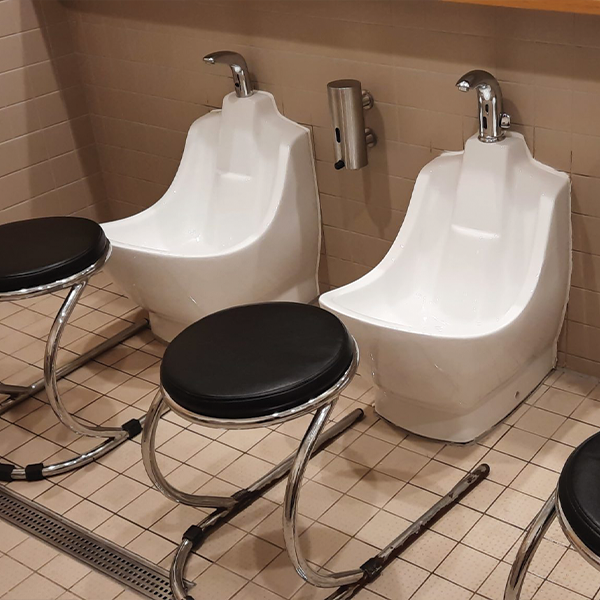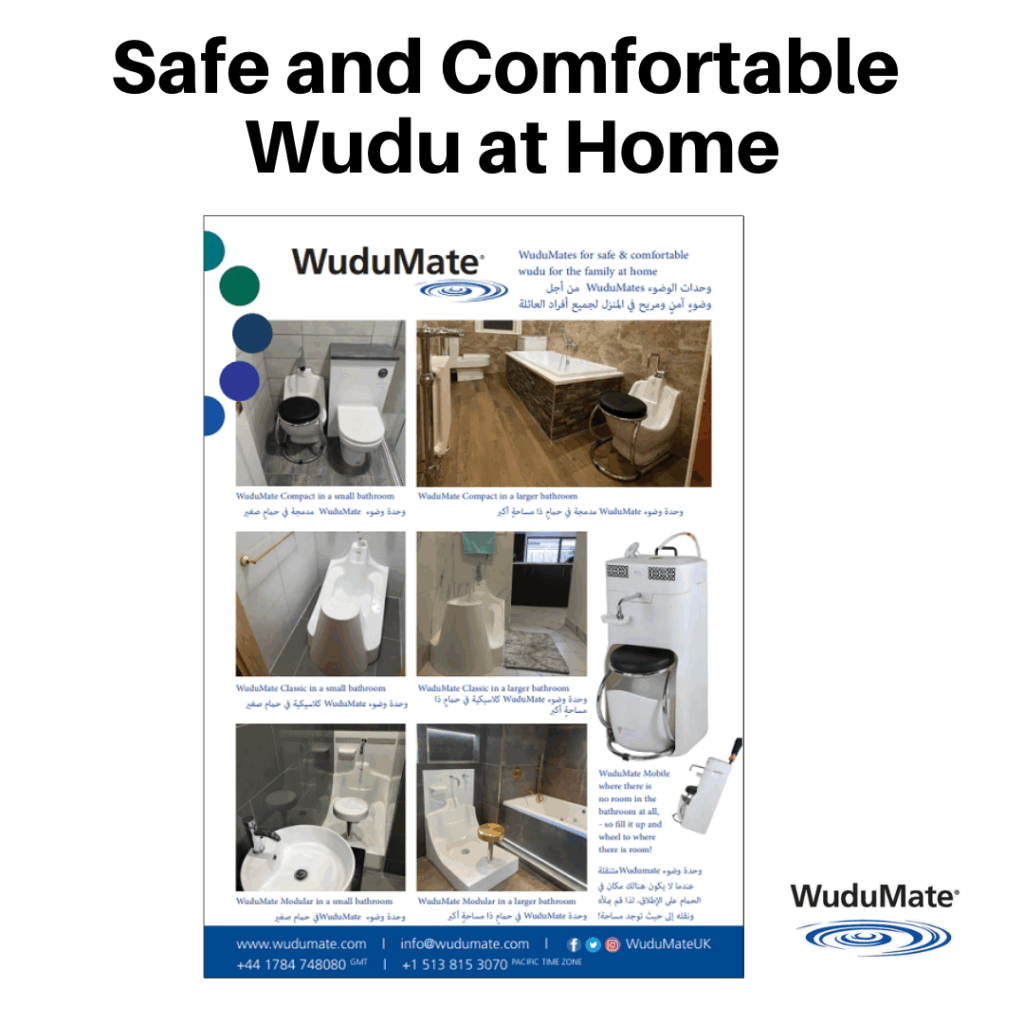
Features & Benefits of the WuduMate Modular
If you are considering any investment in a new ablution area or refurbishment of an existing one, you will want to be sure you are maximizing the benefits of any spend on this project.
To assist you in this task, please find detailed below the features and benefits of the Wudumate Modular.
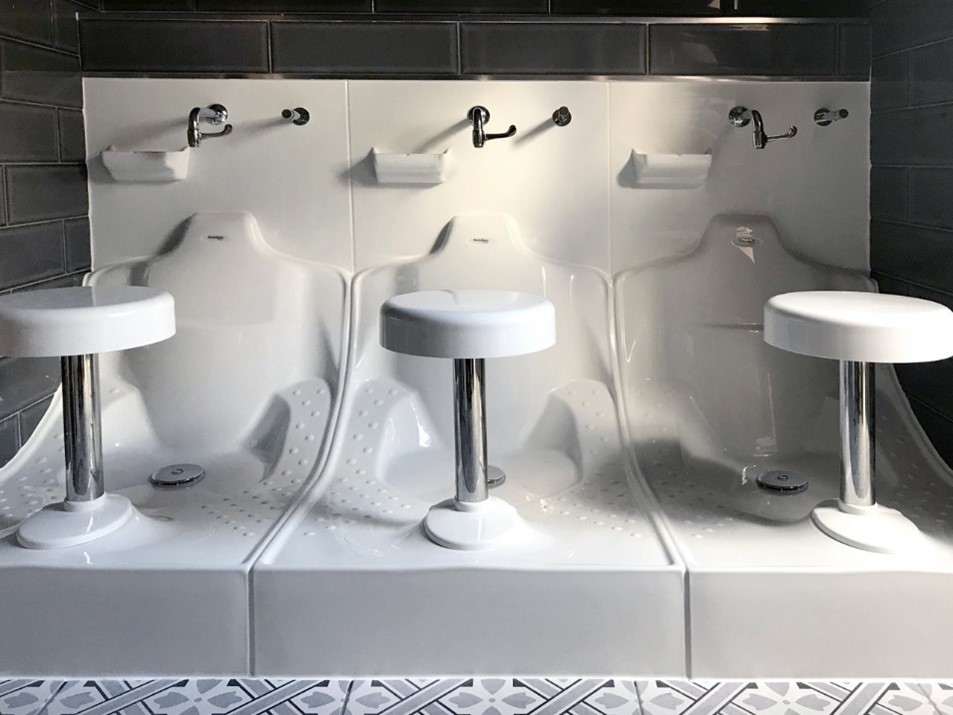
Fitted together for Communal Ablution
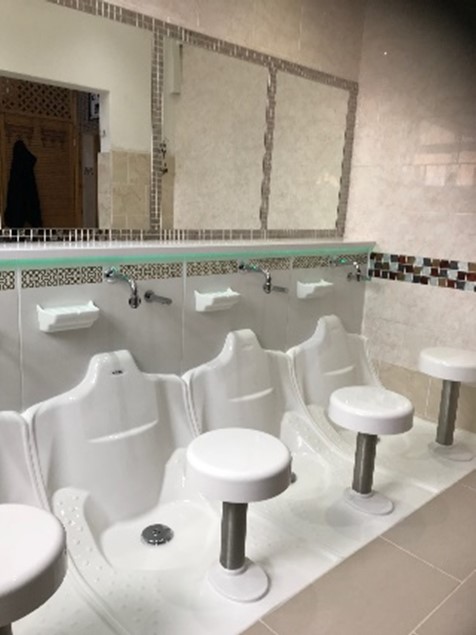
As the name Modular would suggest, the WuduMate modular can be installed singly or fitted together in series, to provide a single, waterproof fixture for communal ablution, with as many washing positions as can be fitted in the space available.
Each WuduMate Modular unit is 700mm (27 inches) wide.

12 WuduMate Modulars in UK Mosque Project
Seated and Standing/Disabled Positions for Wudu
In some parts of the world, specifically South East Asia, standing wudu is preferred to seated wudu, and this preference seems to be on the increase in the West, especially for those dressed in western attire who may have to return to the office after salat.
Seated and Standing Wudu
Whilst the WuduMate Modular is generally installed with a stainless steel seat pole and seat top for seated wudu, the WuduMate Modular also includes a compatible alternative which is a Modular configured without a seat for those who prefer to perform their wudu standing.
The availability of standing positions for wudu can only broaden the appeal of a mosque to those who might prefer to stand rather than be seated.
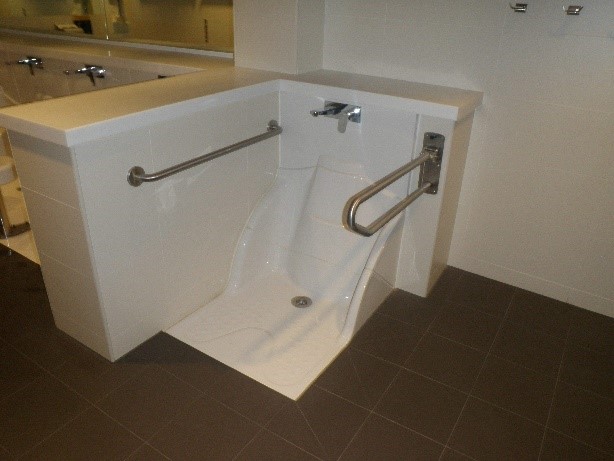
Wudu for Wheelchair Users and Disabled People
When the WuduMate Modular is configured for standing wudu, it can also be used for wheelchair access, by setting the units into the concrete slab, and tiling up to the back of the WuduMate. Installation of even a single standing unit in a row of seated units, will help meet DDA (disability) compliance.
Control of Splashing
The shape of the WuduMate Modular, combined with the location of the spout and the angle of the spout, is designed to provide both the most comfortable position for wudu, but importantly to also minimise splashing of grey water on the person performing wudu or his/her clothes.
Water Management/Efficiency
Whilst tap/faucet preferences vary (sensor /manual etc) WuduMate is proud of its water management features, which include a number of significant water saving options with every WuduMate model.
Every WuduMate tap/faucet includes a 3.7 lpm (1 US gallon) PCA regulator, to:
- Limit the flow of water to 3.7lpm (1 USG)
- Equalize the water pressure (PCA) across each series of taps/faucets, ensuring water flow leaving all the taps in a series is equal. This avoids the tap/faucet nearest the source running fast, and the tap/faucet furthest from the water source running slowly.
The Neoperl 1.8 lpm PCA aerator (0.5 US Gallon) is also available as an option for each tap which potentially halves the water usage, and thus halve the cost of the water itself but also reducing the cost of heating the water.
There are a number of other water saving devices available with each WuduMate model, although some of these do negate the aerator benefits outlines above. (Refer section Water savers below.)
Tap/Faucet Options
The recommended installation design of the WuduMate Modular using a shallow stud wall (framework) with shelf top, makes it possible to easily install several different type of taps/faucets, using the cavity of the framework to store the plumbing.
WuduMate ¼ Turn Wall Mounted Tap/Faucet
The most widely used WuduMate Modular tap is the WuduMate ¼ turn Wall-Mounted Tap. This tap/faucet requires a single source of premixed water, either mixed by a TMV (Thermostatic Mixing Valve) or provided centrally; water flow is controlled by a ¼ turn on/off mechanism located at the end of the spout.
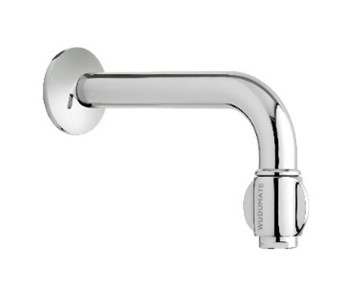
Benefits of the WuduMate ¼ turn tap include:-
- Extremely robust; research has shown that taps/faucets in Wudu areas are quite often used by the elderly as handles to assist standing up and sitting down, so we have deliberately manufactured the ¼ turn WuduMate tap with a thicker walled tube than is normal for additional strength.
- Minimal maintenance; there is very little that can go wrong with the WuduMate ¼ turn wall mounted tap, probably only a replacement cartridge (maybe after 5+ years), which can be changed easily without having to de-install the tap/faucet, probably not even involving the services of a plumber.
- The WuduMate ¼ Turn Manual Tap/Faucet can be fitted with an optional ‘wrist blade’, which is an extension to the tap on/off mechanism which can be operated by the wrist, making it easier for disabled people to use, and more hygienic in so much that it can be turned on/off with the back of the hand.
WuduMate Wall Mounted Non-concussive Time Delay Tap/Faucet
The WuduMate non-concussive (time delay) tap/faucet is operated by a push-button on the end of the tap/faucet, giving a 7 second supply of water prior to requiring another push for a further 7 seconds and so on. Non concussive taps can misbehave when water quality is poor, so installation of an in-line filter is recommended with each tap/faucet.
Non-concussive taps are intended to save water, but if a tap malfunctions there is a risk of water running uninterrupted, and if wudu is finished after 3 seconds of a 7 second run, 4 seconds of water would be wasted. Water saving claims should therefore be treated with caution.
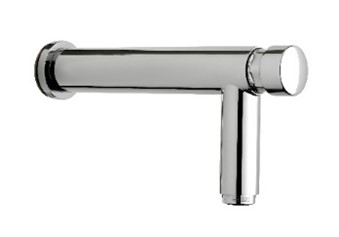
non-concussive tap/faucet
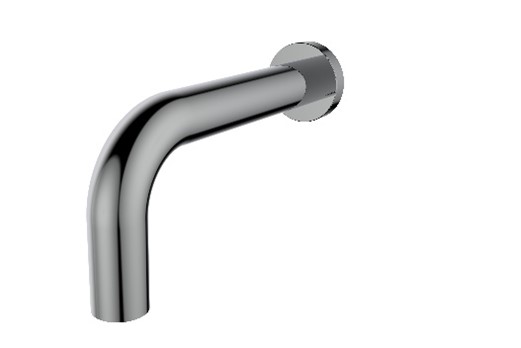
WuduMate Wall Mounted Sensor Tap
Like all auto sensor taps, the benefits of the WuduMate Wall Mounted Auto Sensor Tap/faucet are well documented; in theory the 7 second on/off water cycle should help save water and all auto sensor taps have hygiene benefits in so much as it is not necessary to physically touch the tap/faucet to turn the water on/off. All sensor taps are however considerably more expensive than manual taps, and may well require maintenance over their expected life span, especially if mistreated as they can be by some (e.g. children sticking gum on the sensor to ensure continued running).
Use of Acrylic for Manufacture
A number of materials could be considered for manufacture of a communal ablution facility:-
Tile & cement
When we first reviewed what materials were traditionally used for building communal ablution areas, tile and cement was by far the most common, and probably still is. We experimented with ‘solid surface’ (Corian like material) and considered stainless steel which we found was expensive and dangerously slippery.
After careful evaluation of material options, high-quality sanitary grade acrylic was deemed to provide the most benefits for the WuduMate Modular:-
- Stainless steel was considered too institutional and lavatorial, and the cost to produce a ‘free form’ tool was too expensive, meaning the unit had to be ‘fabricated’ with sheet metal and welds; this method of manufacture results in angular corners which are difficult to keep clean, and can thus potentially harbour bacteria.
- Solid surface had its attractions and we spent many 1000s of pounds working with both proprietary Corian and other solid surface options, but ultimately found it dangerously slippery for feet, too difficult to join seamlessly, and too expensive.
Acrylic is a material which is widely recognised as ‘best practice’ for washing appliances, with its shiny surface facilitating cleaning, reducing maintenance and helping to reduce the incidence of bacteria that spreads foot-borne diseases.
Not only is acrylic easy to keep clean using normal household detergents, it also has the benefit of showing when cleaning is required. When unclean, acrylic loses its sparkle, helping users instigate an appropriate cleaning regime to combat unwanted bacteria, which can otherwise lie unnoticed in tile and cement structures where dirt and bacteria is not easy to see.
Some have questioned whether acrylic is strong enough to support the weight of a large person performing wudu, thus the WuduMate Modular seat is supported by a steel frame, to ensure that the weight on the seat is directed through to the floor rather than onto the acrylic of the unit itself, thus supporting the heaviest of users. The WuduMate Modular seat system has been tested by CERAM (wwww.ceram.com) for weights up to 500kg.
Individual Waste with Trap
Individual traps/wastes improve hygiene and reduce unpleasant odours. The fundamental design of a ‘trough’ based ablution unit, dictates that each person’s ‘grey water’ runs in front of those ‘downstream’, increasingly considered unhygienic, and prone to produce unpleasant odours.
WuduMate have standardised on the UKs leading drain manufacturer MacAlpine, to ensure that the WuduMate installation is of highest quality with minimal maintenance requirements.
Multi-Positional Stainless Steel Seat-posts
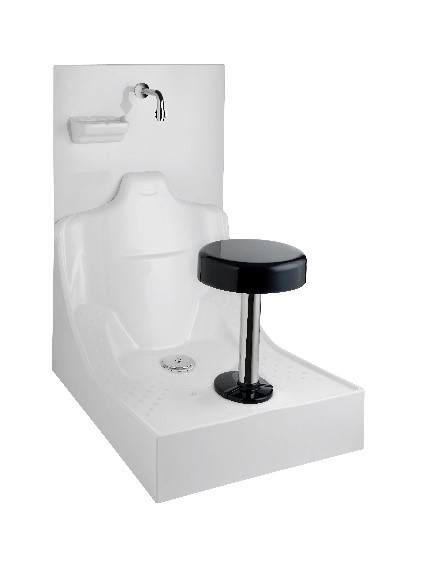
The WuduMate Modular Seat poles are manufactured from high quality stainless steel, to avoid rust and to be long-lasting. Twin-walled black or white acrylic seat tops provide an easy to clean, resilient seat, the new aluminium tops in silver and gold are increasingly popular, and the beech option with chrome trim is another cost effective option to consider.
The WuduMate Modular seats can be located in a forward position for children’s use, or with the pole located at the back of the mounting area for adult use.
Seat Support Bracket
To hold the seat poles firmly in place, the seat pole is supported by a sturdy steel structure under the WuduMate which sits on the substrate (floor base) under the WuduMate. This combination transfers the weight of the person seated on the WuduMate seat, directly to the floor rather than onto the surface of the WuduMate.
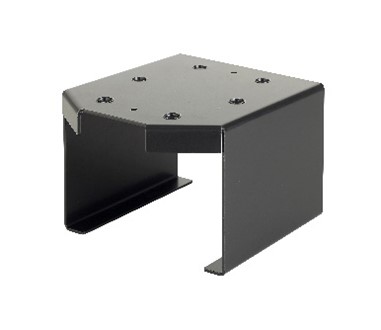
Seat Pole Base Cover
To help keep the seat pole base clean and disguise the fixings holding the pole in place, there is an optional seat pole base cover, manufactured in sanitary grade acrylic to match the colour of the seat top, whether Black or White.
Optional Soap Dispenser
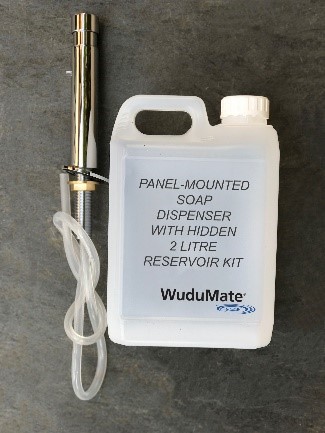
Optional, integrated soap dispensers improve hygiene, reduce waste and minimise shelf and wall clutter.
Decoration
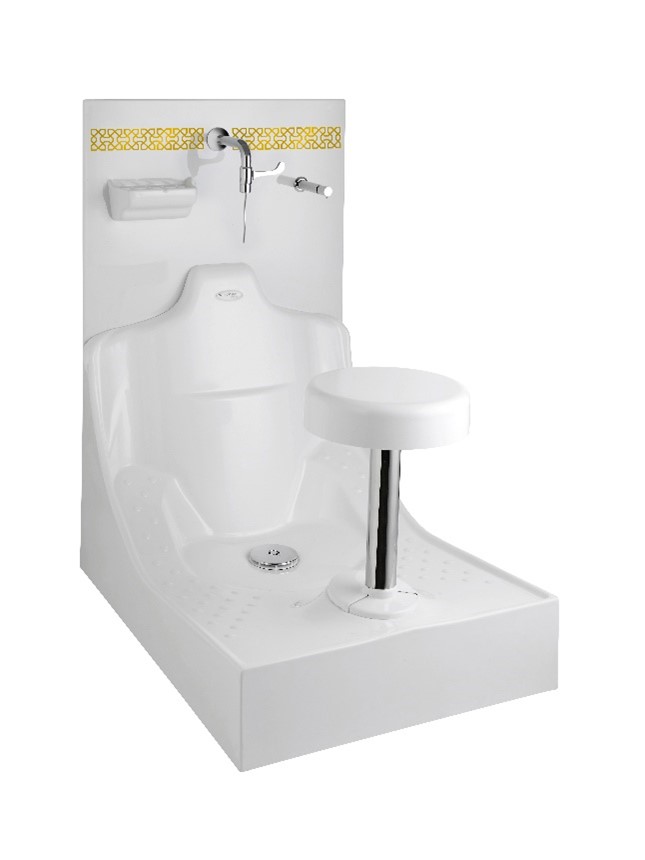
Generic decoration (decal patterns) are available in a number of colours and standard designs, to give aesthetic appeal to the WuduMate; alternatively customisable patterns can be produced, perhaps to complement patterns used elsewhere in a mosque such as a ‘frieze’ around the outside of a building.
Other decoration opportunities
High quality white acrylic provides opportunities for imaginative downlighting to increase aesthetic appeal of the ablution area, extremely effective when used in conjunction with mirrors.
Framework and Shelf Top
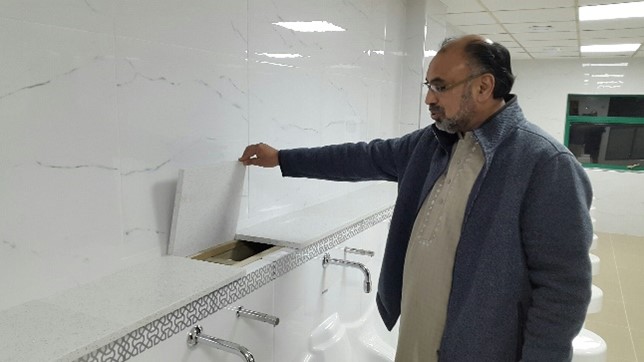
The WuduMate Modular should ideally be installed against a wooden/steel frame fixed to the wall, with a minimum gap of 100-120mm depth, sufficient for a plumber’s access when required for maintenance. This framework provides a number of benefits:
- The WuduMate Modular needs to be affixed to a vertical wall, and since walls, especially in older buildings, might not be vertical, a shallow framework with vertical front ensures a vertical fixing, also saving rework of the wall (e.g. replastering).
- A shelf can be located on the top of the framework, and can be used to hold personal belongings when performing wudu (hats and watches etc.).
- The gap within the framework provides a neat location for plumbing, access to taps for maintenance purposes, reducing potential dirt traps and facilitating cleaning.
- The gap within the framework provides a location for the main waste to run horizontally in the floor at the base of the framework.
- The gap within the framework provides a location for a hidden soap dispenser reservoir, which can either be filled through an access hole in the shelf top, or by removing the shelf top.
Conclusion
Whilst there can be a reluctance from some to implement a modern, state of the art ablution system in favour of a traditional trough system, our experience tells us that the benefits provided by the WuduMate are becoming increasingly important to many, especially the younger generation and young professionals who are used to bright, well lit, more hygienic environments at home.
As more and more of us have access to modern bathroom facilities at home and at work, there is increasingly an expectation that an ablution environment in the mosque should be of similar quality, hygiene, and overall aesthetic appeal as a bathroom at home. Visitors to mosque ablution areas perform wudu as a ritual cleansing, and should not be put at risk of leaving an ablution area with more harmful bacteria on their feet than when they arrived. With the ready availability of the WuduMate Modular, there is no longer a reason why this should be the case.
You can find technical specifications and an installation guide for the Wudumate Modular here
Please contact us on info@wudumate.com or fill in our Contact form if you have any questions about this product or any others in our range
“I didn’t always have a mineral water bottle to hand when I wanted to wash, and taking cups of water into a toilet is not always practical, so the WuduMate is ideal. It can be easily carried in your pocket or handbag, can hold a litre of water which is far more than the small water bottles which we normally use, and after use can be easily folded away again for use next time.”